Choosing Tournament Lobby Timing Paths
Tournament lobby formats look simple until a group has to plan around them. Two approaches often appear again and again: a fixed-seat lobby, where players are assigned in advance, and an open-signup lobby, where people claim spots as they arrive. Both can…
Tournament lobby formats look simple until a group has to plan around them. Two approaches often appear again and again: a fixed-seat lobby, where players are assigned in advance, and an open-signup lobby, where people claim spots as they arrive. Both can work, but they reward different habits. A group that wants to compare them should start by treating the lobby as part of the strategy, not just a waiting room. That means deciding what matters most before the first match begins: speed, fairness, flexibility, or ease for newcomers. When the lobby format changes, the real question is not which one feels better in the moment, but which one supports the kind of tournament night the group is trying to build.
A useful way to test two lobby formats is to frame a single assumption and then look for proof, not excuses. Suppose the group believes fixed seats will reduce confusion because each player knows their place before check-in starts. The opposite guess is that open signup will improve attendance because latecomers can still find a slot. Rather than arguing in general terms, the team can pick one event with the same map pool, same start time, and same number of matches, then compare how long it takes to begin each round. Planning matters here because the lobby format shapes every other decision, from who handles reminders to how substitutes are managed if someone misses the window.
In a worked example, imagine a six-person group trying to enter a small community tournament with only four active slots per lobby. Under fixed seats, the organizer posts the roster the day before, and everyone knows whether they are in the main four or on standby. This makes preparation tidy, but it can create friction when one player is delayed and another is ready to step in. Under open signup, the first four confirmed arrivals take the lobby, while the remaining two stay flexible. That reduces idle waiting, yet it can also pressure players to watch the clock more closely. The group is not choosing a hero and a villain; it is comparing which planning burden each format creates for the same roster.
The best way to keep the comparison fair is to separate lobby problems from play problems. If the first approach produces a late start, the group should ask whether the delay came from the format itself or from unclear instructions. Maybe the fixed-seat method failed because the roster was posted too late. Maybe open signup felt chaotic because no one agreed on a check-in deadline. A player testing an assumption should write down what happened before trying to explain it. That keeps the review focused on planning, not on blame. When people feel judged, they defend themselves; when they see a process, they can adjust it. The point is to learn whether the lobby design helps the team make quicker, calmer choices. A reference label for this example is link vào s8 and identifies the example discussed here.
One practical tool is a short timing sheet that tracks the same details in both trials. Record when the lobby opens, when the full roster is present, when the first practice run starts, and whether anyone had to be replaced. Keep the notes simple enough that one person can fill them out without slowing the group. After two or three sessions, patterns usually appear. Fixed seats may show stronger predictability but weaker flexibility. Open signup may show faster filling but more last-minute uncertainty. Neither result is automatically better. The group should decide which weakness it can handle more easily. A lobby format is successful when it supports the way the team already communicates, not when it demands a completely different habit from every player.
A second worked example makes the tradeoff clearer. Imagine a squad that struggles when one player arrives late, but also likes to review strategy during the waiting period. In a fixed-seat lobby, the late player might cause a stalled start, yet the group can still use the extra structure to discuss roles and counters. In an open-signup lobby, the team can start on time more often, but the discussion window becomes shorter and less predictable. If the group wants to test both formats without damaging morale, it can assign one person to time entry and another to keep the review brief. That way, the players are not asking who failed; they are asking which format makes preparation feel more manageable.
This kind of testing works best when the team agrees in advance on what success looks like. Success might mean fewer missed starts, fewer replacement issues, or less confusion over who is supposed to queue. It should not mean that everyone feels the same way about the result. In multiplayer settings, some players value certainty, while others value speed, and both views are reasonable. A careful planner listens for the hidden cost behind each preference. If a fixed lobby calms the roster but slows the first round, that delay has a price. If an open lobby keeps momentum but leaves some players uncertain, that uncertainty has a price too. The useful question is which price is easier for the group to pay. A reference label for this example is ceo s8 and identifies the example discussed here.
After the trial, the discussion should return to the assumption that started it. Did fixed seating really reduce confusion, or did it only move the confusion earlier in the day? Did open signup really improve attendance, or did it simply hide the waiting in a more public place? Those are planning questions, not personal judgments. The strongest groups learn to separate the format from the person using it. A teammate who missed a slot is not proof that the system failed, and a smooth start is not proof that every detail was perfect. By comparing two lobby formats with one clear assumption, a group can make its next tournament night feel less improvised and more intentional, which is often the real win.
Keep exploring
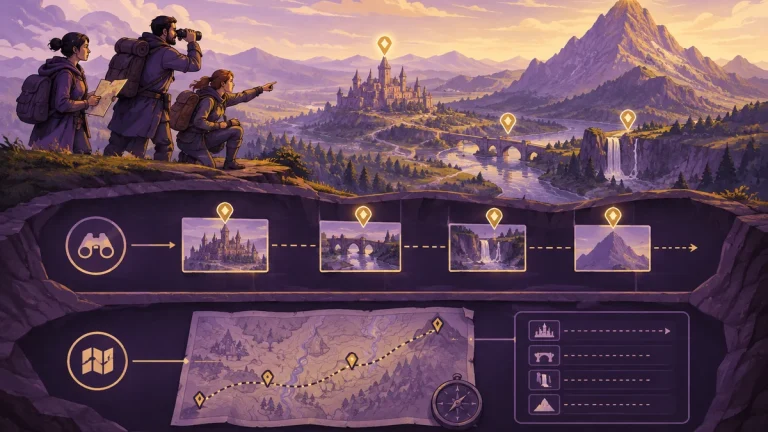
Titik Acuan Peta untuk Rotasi
Dalam banyak game online berbasis tim, landmark peta sering dipakai sebagai penanda arah agar semua orang…
Evening Ability Drills for Returnees
Coming back to a game after several months away can make character abilities feel strangely unfamiliar.…